
When the America the Beautiful quarter program reached its final year, few collectors expected 2020 to rewrite modern U.S. coin history. Circulation slowed. Distribution broke routine patterns. Mint output shifted under pandemic pressure. These conditions created a rare situation where several quarters entered circulation already scarce, already desirable, and already commanding premiums.
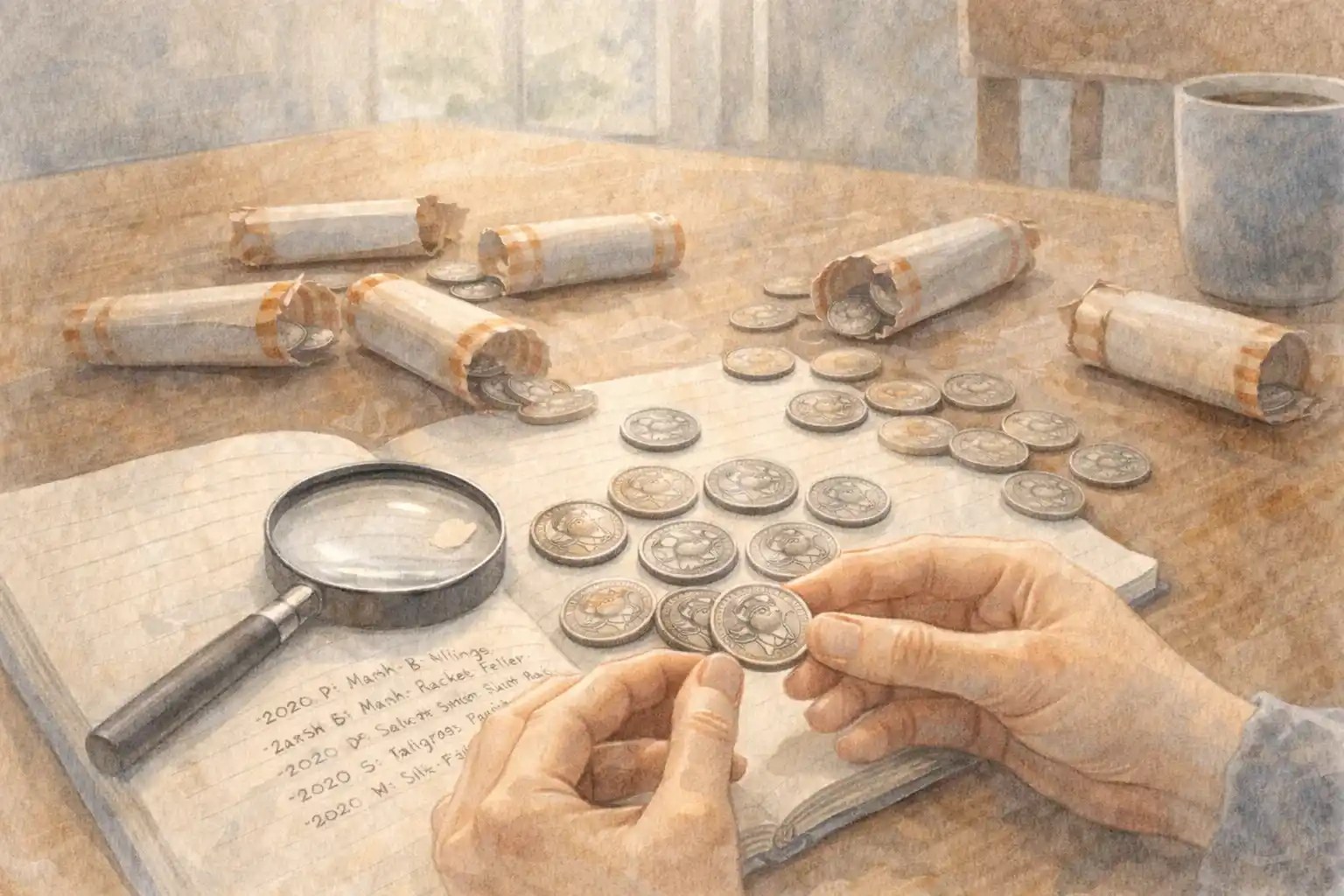
The focus quickly narrowed to one unexpected source: the West Point Mint. Unlike Philadelphia or Denver, the United States Mint does not normally strike circulating quarters at West Point. In 2020, that rule changed. Two million 2020 quarter examples bearing a “W” mint mark were released quietly into everyday change. They were mixed into bags and rolls, not sold directly to collectors. Many were spent before anyone noticed.
Adding fuel to demand, select West Point pieces carried a small “V75” privy mark on the reverse. This symbol commemorated the 75th anniversary of the end of World War II. It sits just to the right of “QUARTER DOLLAR,” small enough to miss at a glance, yet powerful enough to multiply a coin’s value overnight.
From the start, these coins stood apart for three reasons:
Artificial scarcity: only 2 million W quarters across two designs
Unusual distribution: business strikes released directly into circulation
Immediate collector awareness: news spread while coins were still in change
Uncirculated examples began trading for $70–$80 within weeks. High-grade pieces certified by Professional Coin Grading Service quickly climbed into four- and five-figure territory.
What makes 2020 especially notable is that rarity did not depend on decades of attrition. These quarters were rare the moment they left the Mint. That reality changed how collectors searched, shifting attention from old hoards to fresh bank rolls, pocket change, and unopened boxes necessarily checked via the coin identifier.
This first group of instant rarities set the tone for everything that followed in 2020. West Point was only the beginning. Errors, proof anomalies, and unusual finishes would soon push certain quarters far beyond face value—sometimes within days of discovery.
West Point V75 Privy Quarters and Early Error Standouts
The most discussed modern quarter varieties of the last decade trace directly to the 2020 West Point release. Two designs carried the WWII “V75” privy mark: Marsh-Billings-Rockefeller National Historical Park and Tallgrass Prairie National Preserve. Each design saw roughly one million pieces struck, making them scarce by modern circulation standards from day one.
These coins were not sold as collectibles. They were mixed into standard quarter production and released nationwide. That detail alone created a rush. Collectors searched for change, ordered rolls from banks, and inspected every new quarter under magnification and via the best coin value app.
High-grade survivors separated themselves quickly. Certified examples at MS67 and above now define the top of the market.
Key West Point V75 Leaders
Coin | Grade | Market Range | Defining Detail |
2020-W Marsh-Billings-Rockefeller V75 | MS68 | Up to $40,000 | Sharp strike, clean fields |
2020-W Tallgrass Prairie V75 | MS68 | Up to $15,000 | Strong luster, centered privy |
2020-W V75 (either design) | Raw / Uncirculated | $70–$80 | Visible “W” and V75 mark |
The difference between a $70 coin and a five-figure result often comes down to microscopic surface quality. Bag marks, weak strikes, or dull luster sharply reduce upside. For that reason, many early finds were submitted immediately to grading services such as Numismatic Guaranty Company, locking in value before handling damage could occur.
America the Beautiful Errors That Escaped Early
While West Point quarters grabbed headlines, error collectors found equal excitement in Philadelphia and Denver issues. Several error types surfaced unusually early, suggesting quality-control disruptions during pandemic-era production.
The most famous example remains the 2020-P American Samoa “Faceless Bat” quarter. On these pieces, the outer clad layer on the reverse failed to bond properly, exposing the copper core beneath. The bat’s facial details disappear, replaced by a smooth, copper-toned surface. Values range from $50 to $500 depending on severity and eye appeal.
Other notable errors followed a similar pattern:
Missing clad layers producing lighter-weight coins
Doubled die reverses with visible offset lettering
Off-center strikes affecting both obverse and reverse
A particularly strong performer is the 2020-D Virgin Islands doubled die reverse, where separation appears in inscriptions and design elements. Well-defined examples regularly exceed $100 and climb higher when professionally certified.
Verified Error Highlights
Coin | Error Type | Value Range | Key Identifier |
2020-P American Samoa | Missing clad / “Faceless Bat” | $50–$500 | Copper core reverse |
2020-D Virgin Islands | Doubled die reverse | $100+ | Offset lettering |
2020-P Salt River Bay | Off-center strike | $200–$2,000 | Misaligned design |
2020-P Weir Farm | Strike error | $200–$1,500 | Partial blank edge |
Authentication matters. Visual similarity alone is not enough, especially with missing-clad pieces that are sometimes confused with post-mint damage. Weight checks help—standard clad quarters average 5.67 grams. Anything significantly lighter deserves closer inspection.
Digital tools speed up this process. A quick photo analyzed through the Coin ID Scanner app can surface expected specifications such as composition, diameter, and weight, helping flag pieces that deviate from normal production before submission.
By mid-2021, it became clear that 2020 quarters formed a unique category: modern coins that combined circulation discovery with immediate rarity. That combination pushed collectors to look harder, faster, and more systematically than ever before.
Proof Issues, Verification, and How Collectors Locked In Value
Beyond circulation finds and striking errors, 2020 also produced low-mintage proofs that turned scarce almost immediately. San Francisco silver proofs stood out, especially the 2020-S American Samoa quarter. With a mintage of just 427,191 pieces, demand outpaced supply fast. Perfectly preserved examples graded PR70 Deep Cameo now reach prices near $7,200, driven by flawless surfaces and strong contrast.

These proof coins followed a different path than W-mint circulation strikes. They were sold directly to collectors, yet the shutdowns of 2020 disrupted ordering patterns and reduced secondary availability. As a result, top-grade survivors became condition rarities within months rather than years.
At the same time, business strikes showed how mintage alone does not dictate value. Philadelphia’s Salt River Bay quarter exceeded 580 million pieces, remaining common at face value. In contrast, West Point issues with far lower output broke the usual rules. Even raw 2020-W quarters without the V75 privy still trade above $25, proving how mint origin can outweigh sheer production numbers.
What Collectors Checked First
Successful searches followed a consistent routine. Small details separated keepers from spenders.
Edge inspection for exposed copper or missing clad layers
Weight testing against the 5.67-gram clad standard
Magnification to spot die doubling, cracks, or weak bonding
Lighting tilt to reveal surface disruptions and strike quality
Coins showing promise were isolated immediately to prevent friction damage. Many collectors used 2×2 holders or capsules before any further handling.
For fast identification, some relied on Coin ID Scanner, a freemium mobile app available on Android and iOS. A single photo pulls up a detailed coin card with mint year, composition, weight, diameter, and an estimated value range. That step helped confirm West Point mint marks, spot mismatched weights, and rule out normal strikes before grading costs were incurred.
Grading, Selling, and Market Timing
Professional certification became the final step for most high-value 2020 quarters. Submitting to PCGS or NGC proved essential once values crossed the $50 threshold. Coins graded MS67 or higher locked in premiums that raw examples could not sustain.
Market data from completed eBay sales provided realistic pricing guidance. Listings above $50 typically performed best when supported by clear photos, certification numbers, and concise descriptions. Proof coins benefited from registry competition, while error coins drew attention from specialists willing to pay for verified anomalies.
Why 2020 Still Matters
The 2020 quarter series changed how collectors view modern U.S. coinage. Rarity no longer required age. Distribution quirks, emergency production shifts, and mint experimentation created instant standouts. For those who checked change, ordered rolls, or acted quickly, 2020 offered something rare in itself: modern coins with immediate, measurable upside.
That combination keeps interest strong today—and keeps collectors looking twice at every quarter that crosses their hands.